

J Law’s M.E.T.S. (Multiple Edge Trading Strategy)
I Looked Into the Trading System of a 2-Time US Investing Champion — Here’s What Makes It Different
Most trading courses sell you a feeling — confidence, certainty, the promise that this one indicator will finally make the market make sense. Almost none of them come from someone with an independently verified track record. That’s what made me actually stop and read further when I came across J Law’s M.E.T.S. (Multiple Edge Trading Strategy).
Download Now – Click Here
J Law isn’t a self-declared guru. He’s a two-time winner of the United States Investing Championship — a competition that’s tracked audited, real-money trading accounts since 1983. Winning once could be luck. Winning it twice, with a two-year return that beat the S&P 500 by a wide margin, is a different conversation entirely.
So I dug into what M.E.T.S. actually teaches, and whether the “multiple edge” idea is more than just a catchy name.
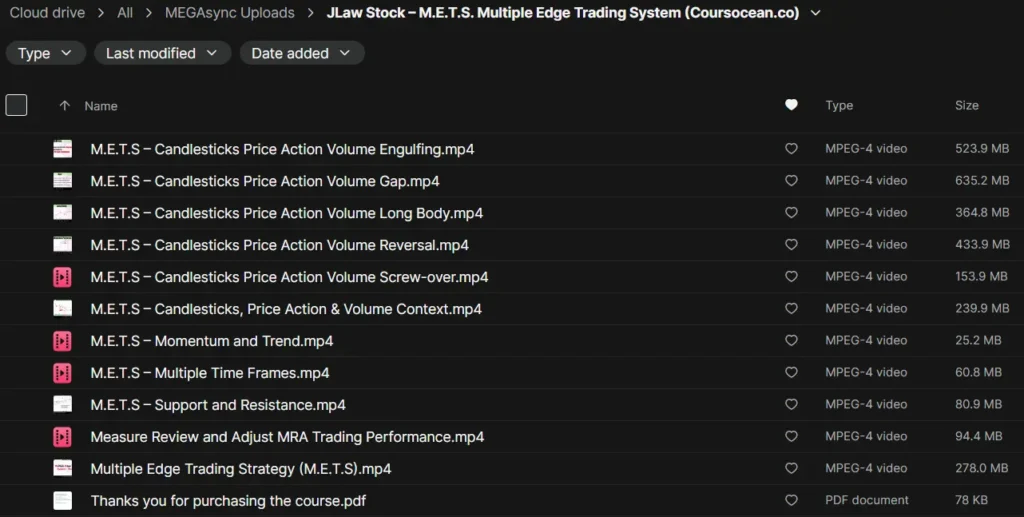
What You Get :-
The Core Idea: Don’t Trade on One Signal — Stack Several
Here’s the problem most retail traders run into: they find one signal — a moving average crossover, a candlestick pattern, an RSI reading — and trade it in isolation. It works sometimes, fails other times, and there’s no consistent way to know which trade is which in advance.
M.E.T.S. flips that approach. Instead of one signal, J Law’s system requires multiple independent confirmations to line up before a trade even qualifies:
- Trend direction — is the broader market actually moving the way you think it is?
- Price structure — does the chart pattern and volume support the setup?
- Fundamental context — is there anything about the company or sector that contradicts the technical picture?
- Risk parameters — is the position sized correctly before you even think about entering?
- Psychological discipline — can you actually follow this rule when it’s uncomfortable to do so?
None of these alone is a trading strategy. Together, they’re a filter that’s designed to cut out a lot of the low-quality setups that individual-indicator trading lets through.
Why “Rules-Based” Matters More Than People Think
The part of this that I found genuinely useful isn’t the technical analysis — plenty of courses teach chart patterns. It’s the emphasis on removing decision-making in the moment.
Every experienced trader will tell you the same thing: the hardest part of trading isn’t finding a good setup. It’s following your own rules when fear or greed kicks in — cutting a loss you don’t want to cut, or walking away from a trade that “feels” too good to pass up but doesn’t meet your criteria.
A documented system like M.E.T.S. exists specifically to take that decision out of the heat of the moment. The rules get decided in advance, calmly, before a single dollar is at risk. That’s a very different mental exercise than trying to “read the market” live.
What the Course Actually Walks You Through
Structurally, it follows what J Law calls the full Decision Chain:
- How to spot a valid setup using multiple confirming signals, not one
- Entry rules based on objective, repeatable criteria
- Exit rules — including stop placement and position sizing decided in advance
- How to manage the psychological side of trading, especially during losing streaks
- How to review and refine your own process over time, instead of switching strategies every time one trade goes wrong
It’s less “here’s a magic setup” and more “here’s a complete operating system for how you make every decision.”
Who Actually Benefits From This
- Complete beginners get a full, structured process instead of a scattered collection of tips — arguably more valuable than any single indicator
- Traders with some experience often already know pieces of this (trend-following, basic risk rules) but haven’t combined them into one consistent process — this does that work for you
- Experienced traders may get the most value from the “stacking multiple edges” concept specifically, since it’s a genuinely different filter than most single-signal systems use
The Honest Caveat
No system — however well-documented — removes risk from trading. J Law’s championship returns reflect his own execution and years of discipline; the course teaches the framework, not a guarantee. Markets change, and past performance, competition results included, doesn’t predict future results.
My Takeaway
What separates M.E.T.S. from the average trading course isn’t the technical content — trend-following and risk management aren’t new ideas. It’s that the person teaching it has an audited, independently verified track record backing the framework, and the system is built to solve the actual problem most traders struggle with: consistency, not cleverness.
If you’re looking for a single indicator that “wins every time,” this isn’t that. If you’re looking for a repeatable, rules-based process that removes guesswork from your own decision-making, it’s worth a genuinely closer look.