

Trading Dominion – Portfolio Investing Course
$24.99
REGULAR PRICE – $ 997 .
WE OFFER – $ 24.99 .
Discription :-
If you’ve spent any time googling “best portfolio investing course” or “how to build a diversified portfolio like a hedge fund,” you’ve probably stumbled across Trading Dominion. Here’s an honest, no-fluff breakdown of what it actually teaches, who it’s for, and whether it lives up to the hype.
What Exactly Is Trading Dominion?
Trading Dominion is an online investing course built to take someone from “I have no idea what a Sharpe Ratio is” to “I can confidently build and manage my own portfolio” — without needing years of finance school.
What sets it apart from the sea of generic “how to invest” content on YouTube is that it doesn’t stop at theory. The course ships with roughly a dozen pre-built, ready-to-deploy portfolios, so you’re not just learning concepts in a vacuum — you can actually put them to work right away. That’s the part most investing courses skip entirely.
Who Is This Course Actually For?
Trading Dominion is a solid fit if you:
- Want to build a passive income portfolio without paying a fund manager 1-2% a year to underperform the market
- Are trying to actually understand risk management instead of just hoping for the best
- Want to learn how institutional investors use factor investing, dual momentum, and risk parity — and apply it yourself
- Are ready to invest in ETFs and other asset classes with real confidence instead of guessing
- Want to understand tools like the Sharpe Ratio, Kelly Criterion, and the Efficient Frontier well enough to actually use them
What You’ll Learn Inside the Course
Here’s where Trading Dominion earns its reputation for going deeper than the typical “beginner investing” course.
Strategic vs. Tactical Asset Allocation
You’ll learn the real difference between long-term strategic allocation and short-term tactical moves — a distinction that trips up most retail investors and is a major reason people make panicked, emotion-driven decisions with their money.
Bonds, Asset Classes, and Hedge Fund Strategies
The course breaks down how bonds actually function inside a portfolio, what role different asset classes play in diversification, and how you can borrow strategies from the hedge fund world and apply them yourself — without needing an institutional account.
Risk Measurement and Performance Metrics
This is where the course gets hands-on. You’ll work directly with:
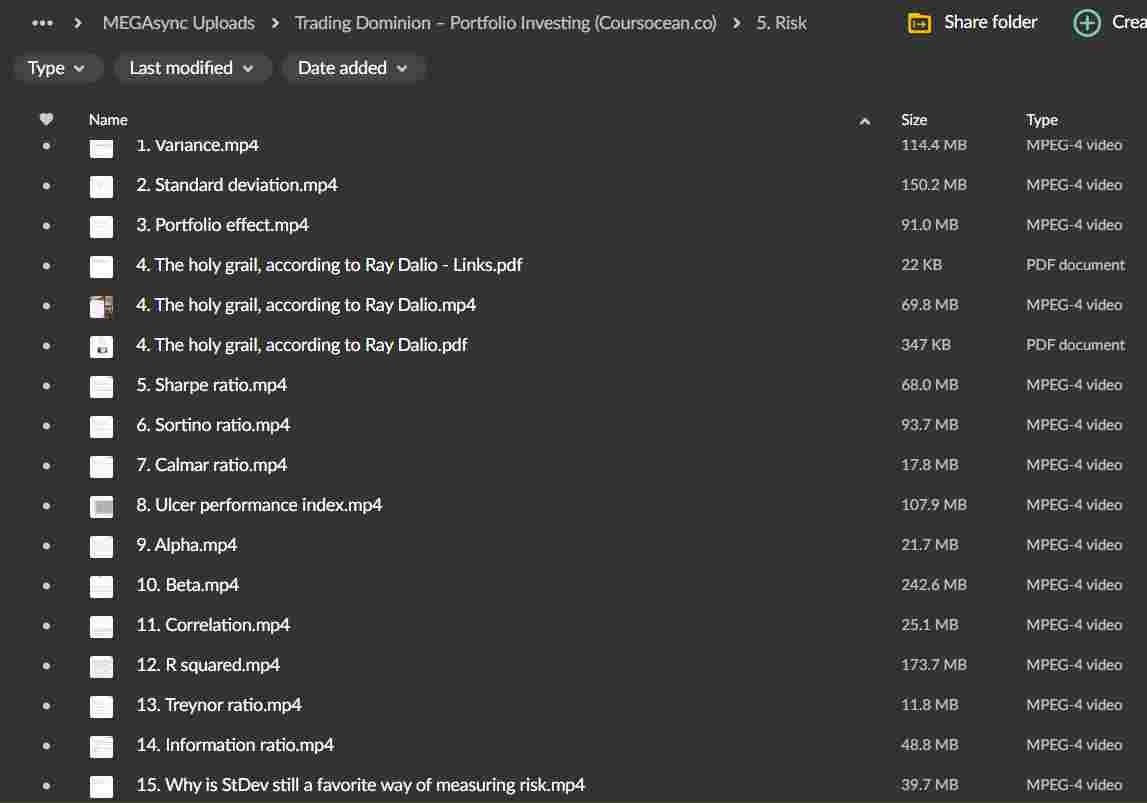
- Sharpe Ratio
- Sortino Ratio
- Calmar Ratio
- Alpha and Beta
- Value-at-Risk (VaR)
Instead of these being abstract finance-textbook terms, you’ll understand exactly what each one measures and, more importantly, when to actually use it.
Modern Portfolio Theory (MPT) and the Efficient Frontier
Modern Portfolio Theory is one of the most searched topics in finance for a reason — it’s the backbone of how professional portfolios get built. The course walks through constructing a minimum variance portfolio, mapping out an efficient frontier, and finding the risk-return balance that fits your actual goals, not a generic template.
Dual Momentum and Adaptive Allocation Strategies
You’ll review six different dual momentum portfolio models and learn how adaptive allocation works in the real world — not just as a line in an academic paper. Dual momentum investing is one of the most searched strategies among self-directed investors right now, and for good reason: it’s designed to reduce drawdowns during market downturns.
Frequently Asked Questions
1. Is this course focused on active trading, or is it more about long-term investing?
It’s built around long-term portfolio management rather than active trading. The whole approach centers on constructing a diversified portfolio you set up and then manage with minimal ongoing effort — some materials even mention spending as little as 20 minutes a month on it, which is very different from day-trading-style courses.
2. What does the course actually teach about building a portfolio from scratch?
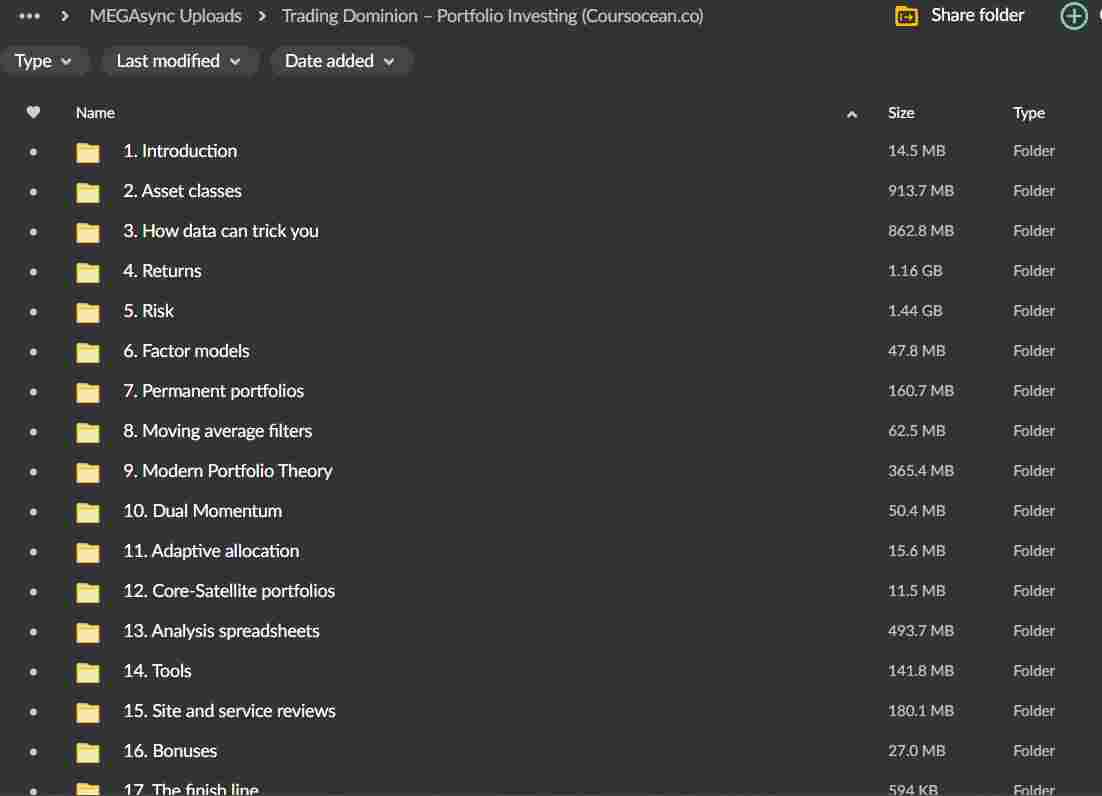
It walks through the building blocks first — the difference between strategic and tactical asset allocation, how bonds and other asset classes behave, and how to measure and manage risk properly. From there it moves into more specific frameworks like Modern Portfolio Theory, permanent portfolios, and approaches such as Dual Momentum, Adaptive Allocation, and Core-Satellite investing.
3. Do I need to already have investing experience to understand this course?
No, it’s designed to work for both beginners and people who already invest. Since it starts with foundational concepts like asset allocation and how returns and risk actually work before moving into more advanced portfolio construction methods, you don’t need a finance background to follow along.
4. Does the course just teach theory, or do I get anything I can use right away?
Beyond the conceptual lessons, participants get access to a set of pre-made portfolios they can reference or start using relatively quickly, rather than having to build every strategy completely from scratch. That’s paired with a community of other investors going through the same material, which is useful for comparing notes as you apply what you learn.
5. Is Portfolio Investing meant to replace active trading, or work alongside it?
It’s generally positioned as a complement rather than a replacement. The idea is to put “unused cash” — money not actively deployed in trading — into a diversified, lower-maintenance portfolio, so you’re earning a steadier return on capital that would otherwise be sitting idle, on top of whatever active trading or options income you’re already generating.
View More Courses – Click Here
You must be logged in to post a review.
Related products
-

-
Sale!
 Forex & Currency Trading
Boss Pack TrickTrades Course
Original price was: $997.00.$32.99Current price is: $32.99. Add to cart -

-


Reviews
There are no reviews yet.